
Fence Cost Calculator
A typical residential fence runs roughly $15 to $55 per linear foot installed, depending on material, height, gates, and local labor — but averages like that hide as much as they reveal. So this fence cost calculator turns your own length, height, material rates, and extras into a planning total you actually control. Nothing here locks in a national average.
Maybe you searched for a fence cost estimator, a fence price calculator, a fencing cost calculator, or a fence installation cost calculator instead. Either way, the first step is the same: measure the run in linear feet, write down your assumptions, then compare written quotes side by side using this calculator as your starting point.
Fence Cost Calculator
Here’s how it works. First, enter your fence length (or the optional yard length × width if you’d rather let the tool work out the perimeter), plus height, gates, and waste. Next, on the Rates step, pick a material and swap the starting ranges for your own local material and labor dollars per linear foot. The Results step then shows a core total (material plus labor) alongside an all-in total that adds removal, permit, access, tax, and a minimum charge if you’ve entered them. Finally, paste in a contractor quote to see exactly how far off it runs, in dollars and percent.
How the fence cost calculator works
The tool prices everything by linear foot, since that’s the unit most fence bids use anyway. Material rate applies to the order length (net feet plus waste), while labor applies to net length only. Walk gates and drive gates, meanwhile, are priced separately, so the hardware cost doesn’t get buried inside one blended number.
- Measure — length, optional yard size helper, height, corners, gates, waste, removal, permit, access
- Rates — material type, material $/LF, labor $/LF (or DIY with labor at zero), gate costs, optional posts and concrete, tax, minimum charge
- Results — core vs all-in totals, cost per linear foot, transparent breakdown, quote comparison
The optional post estimate is a heuristic based on spacing and corner count, nothing more. So treat the post and concrete lines as planning aids, and confirm the real counts with a supplier takeoff or your installer before you order anything.
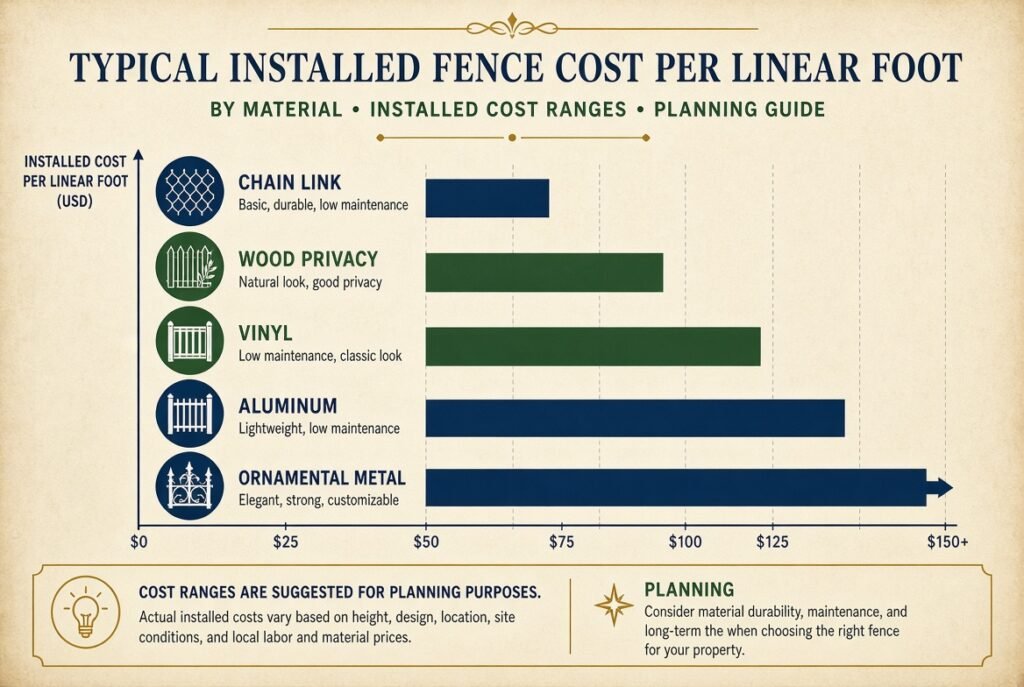
Fence cost per linear foot (planning ranges)
Published guides often cite installed ranges from the mid-teens to the mid-fifties per linear foot for common residential work, but actual bids move with height, material grade, terrain, and local market conditions. So use these bands only to sanity-check the rates you type into the calculator, then swap them out for real local quotes.
| Material (typical 6 ft) | Planning band ($/LF installed) | Typical lifespan | Notes |
|---|---|---|---|
| Chain link | About $12–$30 | About 15–25 years (30+ with good galvanizing or vinyl coat) | Often the lowest installed cost; height, gauge, and privacy slats change the number |
| Wood picket | About $15–$35 | About 10–20 years | Open style; stain or paint is usually extra |
| Wood privacy | About $20–$45 | About 10–20 years (cedar often longer) | Solid boards; waste and gates matter |
| Vinyl / PVC | About $25–$55 | About 20–30 years | Higher material, often lower long-term maintenance |
| Composite | About $30–$75 | About 25–30+ years | Premium privacy look; many brands carry long product warranties — price like a mid-to-high material rate in the tool |
| Aluminum | About $30–$60 | About 30–50 years | Ornamental looks without the rust risk of steel |
| Wrought iron / ornamental metal | About $40–$80+ | About 40–60 years | Custom work and finish drive the high end |
Even so, a higher upfront rate can still win out on cost per year of service. That’s why it’s worth comparing your all-in planning total against expected lifespan whenever two materials look close on day-one price alone.
For a quick size check: 100 LF at $25/LF comes to about $2,500 core, and 150 LF at $30/LF comes to roughly $4,500 core, before gates, removal, and tax. Once you enter your own rates, your total will look different — and that’s the point.
What drives fence installation cost
Length and layout
More linear feet simply means more material and labor. Corners, steps, and short runs, on the other hand, raise post density even when the total length stays modest. The optional yard length × width helper estimates perimeter as 2 × (L + W) — so adjust it if one side stays open or a building wall replaces a run.
Height
Four-foot and six-foot fences dominate residential work, while eight-foot privacy adds material cost and often runs into stricter permit rules. As a rule of thumb, 6-foot fencing often costs about 15–30% more per linear foot than 4-foot, simply because of taller posts, more infill, and deeper footings. Eight-foot work steps up again from there. Height in this tool only guides the suggested rates and the face-area display — it never invents a hidden multiplier on your totals, so enter the rates your own market actually quotes.
Material
Wood privacy, wood picket, chain link, vinyl, aluminum, and ornamental metal each carry their own material and labor rates. Privacy, though, is really a height-and-opacity outcome rather than a single material — both wood and vinyl can deliver a solid screen. Dedicated pages for chain link, privacy, and wood will eventually reuse this same calculator, just with different defaults.
Gates and access
Walk gates and drive gates both cost more per opening than a straight run of panel. Walk gates often land around $150–$500 installed, while drive or double gates can run $400–$1,200 or more, depending on width and hardware. So enter the counts and per-gate dollars directly in the calculator, rather than letting fence gate cost hide inside a blended per-foot average.
Tight side yards, rocky soil, roots, and slope all add labor even when the material stays exactly the same — so enter those as access adders instead of guessing inside a national average. Before you dig, call 811 at least two working days ahead. Utility lines can sit only inches below the surface, and even a hand shovel can strike one.
Old fence removal cost
Fence removal cost, sometimes called tear-out, is usually quoted either per linear foot or as a flat haul-away fee. Published planning bands commonly land around $3 to $20 per linear foot, depending on material, whether the posts come out, and disposal fees — wood and concrete-set posts, in particular, usually cost more to remove than a light chain-link run. So enter a flat dollar amount, a $/LF amount, or both in the calculator, which keeps replacement bids genuinely comparable. Either way, tear-out cost should show up as its own line on a written quote, not get buried inside a blended install rate.
Posts, concrete, and post depth
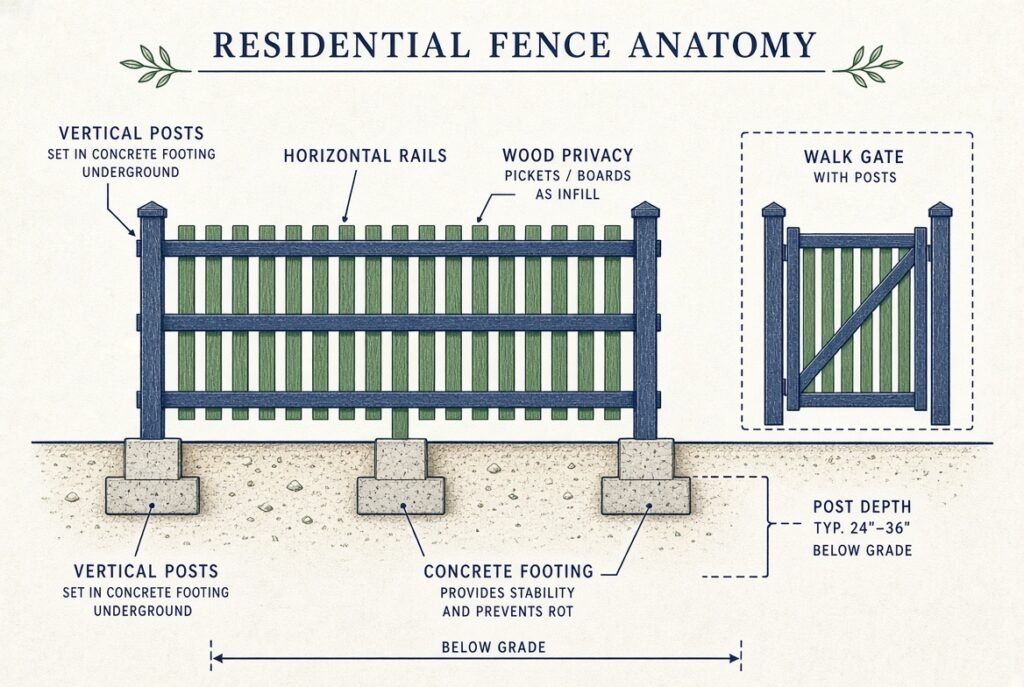
Most installed fences set their posts in concrete. That usually runs about $5–$15 per post, depending on hole size and mix — commonly around two 50-lb bags per hole for a standard 6-foot residential post. Entering your own per-post concrete cost in the calculator gets you a tighter total. Rocky or rooty ground, though, slows digging and can raise labor even when the material rate doesn’t change at all.
Hole width matters just as much as depth: a 4×4 post typically needs about a 12-inch-diameter hole so the concrete can fully surround it. Narrow holes are a common reason posts loosen later. Post depth follows local code and the frost line instead of one fixed number — cold-climate areas often require footings well below frost (around 42 inches in parts of the Midwest, for example), while mild climates get away with a shallower set. Shallow posts, in fact, are a common reason fences start to lean within just a few seasons. Optional post lines in the tool are planning aids only, so confirm the real counts and spacing with your supplier.
Staining and sealing (wood)
Most wood fence quotes don’t include stain or sealer. Plan on roughly $2 to $14 per linear foot if you hire that out, or treat it as a DIY follow-up instead. Skipping protection altogether is a common reason boards gray, split, or fail early, so reseal on the schedule your product recommends — often every one to three years for an exposed privacy run.
Cost to replace a fence
Replacement usually covers tear-out, disposal, new posts or post repair, and new infill. If the posts are still sound, though, some crews can re-rail or re-board at a lower cost than a full rebuild. So use the removal fields in the calculator for tear-out, then price the new run at current material and labor rates. Afterward, compare that planning total to a written replacement estimate — not a phone quote with no scope attached.
Fence repair vs replacement
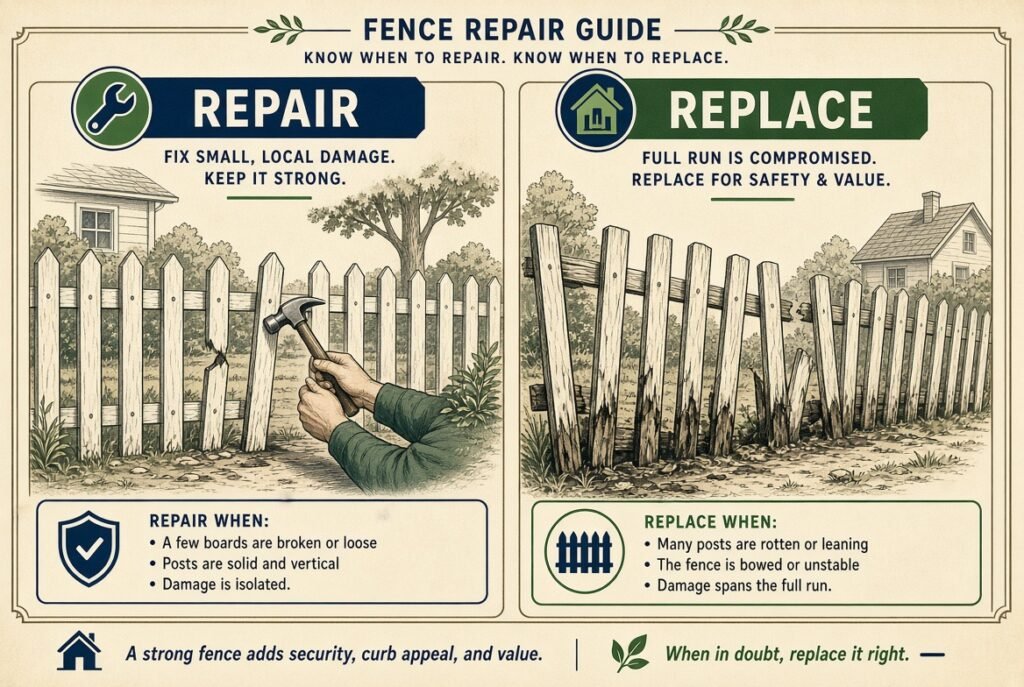
Repair makes sense when the damage stays local — a few broken boards, one leaning section, or a single gate. Full replacement usually wins instead when posts are rotten below grade, the whole line leans, or you’re changing height or material. This tool, to be clear, is built for replacement and new-install planning, not for pricing individual board or post repairs.
How much does a fence cost for common lengths?
Rough core totals — material plus labor only, at mid-range rates — can help you frame a budget before you even open the calculator. After that, just multiply your own $/LF by length for a tighter number.
| Length | At ~$20/LF | At ~$30/LF | At ~$40/LF |
|---|---|---|---|
| 50 LF | ~$1,000 | ~$1,500 | ~$2,000 |
| 100 LF | ~$2,000 | ~$3,000 | ~$4,000 |
| 150 LF | ~$3,000 | ~$4,500 | ~$6,000 |
| 200 LF | ~$4,000 | ~$6,000 | ~$8,000 |
Gates, removal, permits, and tax sit on top of these core figures. That is why the results panel separates core total from all-in total.
Acreage fencing is really the same math, just over a longer run: a square 1-acre perimeter comes to about 835 linear feet, and a square ½-acre perimeter comes to about 590. So multiply that by your installed $/LF, add gates and corners, and you’ve got a first budget — then refine the length against the actual property line once you’re in the calculator.
How much does a fence cost in your area?
Labor and material rates swing a lot by region. Coastal and high-cost metros often run well above national midpoints, while many Southern and inland markets land lower. Because of that, this calculator doesn’t lock in a regional multiplier at all — you enter local material and labor $/LF yourself, so the planning total actually matches your market. It’s worth pulling at least three written local quotes on the same scope (length, height, material, gates, removal) to calibrate the rates you type in.
Fence estimate and free fence quote checks
A useful fence estimate lists length, height, material, post spacing, gate count, removal scope, and whether concrete, permits, or haul-away are included. So once you get a free fence quote or a paid proposal, enter that same scope into this calculator and paste the dollar amount into the quote field. Large gaps usually just mean different assumptions, not some mystery average at play.
Material snapshots
Chain link fence cost
Chain link often lands at the low end of installed cost per foot. Still, height, top rail, and privacy slats can change both material and labor, so confirm wire gauge on every quote: residential fabric is often around 11 or 11.5 gauge, while heavier 9-gauge fabric costs more and lasts longer under abuse. That means two bids at the same $/LF can still differ a lot on thickness and longevity. Use this hub for a first pass — a dedicated chain link page will eventually open the same tool with chain link pre-selected.
Wood fence cost
Wood picket and wood privacy share posts and rails but differ in board coverage and waste. Stain, paint, and higher-grade lumber, meanwhile, are usually separate line items. So enter your board rate as material $/LF, which keeps the calculator honest to your actual quote.
Privacy fence cost
Privacy usually just means six-foot solid coverage in wood or vinyl. That’s why the calculator treats privacy as a style note plus a height, rather than inventing a fake material name for it. Wood and vinyl both stay available, so you can compare rates side by side.
Vinyl, aluminum, and ornamental metal
Vinyl and aluminum often trade a higher upfront material cost for lower maintenance down the road. Ornamental metal, meanwhile, sits at the high end once custom panels and finishes get involved. Either way, the starting suggestions in the tool are only labels, so always overwrite them with real supplier and installer numbers.
Permits and local rules
Many cities require a permit for fences over four feet, and setbacks or HOA rules can limit height and style on top of that. Permit fees often run about $20–$200 depending on the city, so check before you build to avoid stop-work orders or fines later. The permit field in the calculator is a simple flat dollar input, which lets you include the fee without trying to invent a jurisdiction. If boundaries are unclear, confirm frost depth, post depth, and property lines with local code and a survey first. It’s also worth asking what product warranty the manufacturer provides, and what labor warranty the installer adds on top.
Related calculators
- Chain Link Fence Cost Calculator
- Wood Fence Cost Calculator
- Privacy Fence Cost Calculator
- Roof Replacement Cost Calculator
- Roof Square Footage Calculator
- Hardie Siding Cost Calculator
- Fascia & Soffit Cost Calculator
- All calculators
Fence cost calculator FAQ
How accurate is this fence cost calculator?
Accuracy tracks the rates and lengths you actually enter. The tool never locks in a national average. So when your material, labor, gates, and extras match a written scope, the planning total becomes a fair check against a contractor quote. Still, field conditions the form can’t see — rock, underground utilities, HOA specs — belong in a professional estimate, not a calculator.
What is a fence cost estimator vs a material list?
This fence cost estimator focuses purely on dollars: linear feet times rates, plus gates and adders. A full material list — post count, rail count, picket or panel count, concrete bags — is a separate takeoff step. So treat the optional post lines here as a heuristic only, and ask your supplier for a cut list before you buy.
How much does fence installation cost per foot?
Installed cost per foot is really material plus labor, often quoted as one blended number. Splitting them in the calculator lets you test DIY labor (labor at zero) or compare two bids that weight labor differently. Either way, the planning bands in the table above are starting points, not guarantees.
Can I get a free fence estimate with this tool?
You can absolutely build a free planning estimate from your own measurements and rates. It’s not the same as a contractor’s free fence quote, though, and it won’t schedule a site visit. Use it to prepare your questions first, then request written estimates from licensed local installers.
Does the calculator include gates?
Yes — enter the walk gate count and drive or double gate count, then set a dollar amount for each type. Gate hardware and posts are often priced higher than a plain run, so keeping them separate avoids a misleading per-foot average.
Should I repair or replace my fence?
Repair fits isolated damage with sound posts. Replacement fits widespread rot, a lean, or a change in height or material instead. So run a replacement planning total here first, then ask a contractor what a repair-only scope would cost for just the damaged sections.
How much does it cost to replace a fence?
Replacement cost works out to length times installed rate, plus removal, gates, and fees. For example, a 150 LF wood privacy line at $30/LF core comes to about $4,500 before tear-out and tax. Enter your own numbers in the calculator for a total that actually matches your yard.
How much does fence removal cost?
Fence removal cost often runs from a few dollars up to about $20 per linear foot once labor and disposal are included, with concrete-set wood posts toward the higher end. So enter tear-out as a flat $ amount, a $/LF rate, or both, which keeps your replacement total honest to the full job.
How deep should fence posts go?
Depth follows local code and the frost line, not one single national number. Cold markets may require three feet or more below grade, while mild climates often allow less. Either way, ask your building department for the frost-line rule in your city, and treat shallow posts as a long-term failure risk rather than a savings.
How long does a fence last?
Lifespan by material is approximate: chain link often runs 15–25 years, wood privacy about 10–20 (cedar can go longer with care), vinyl about 20–30, and aluminum or ornamental metal often 30–50-plus. In practice, maintenance, post depth, and climate move those ranges just as much as the product label does.
Does fence cost include staining or sealing?
Usually not — staining or sealing is a separate line, often about $2 to $14 per linear foot when hired out. So budget it after the install if your wood quote comes unfinished.
Does a fence add value to a home?
A sound, code-compliant fence can improve privacy, pet containment, and curb appeal, all things some buyers genuinely value. It usually won’t return its full cost at resale the way a major kitchen remodel might, though — still, a functional fence is often a real practical plus for households with kids or pets.
Is this a final contractor price?
No — it’s a planning aid, not a contract. The final price belongs in a written agreement after an on-site look at posts, grade, access, and materials. Some installers offer financing too, so ask before you sign if that matters for your budget.
Limits and disclaimer
This fence cost calculator is a planning aid, not a professional takeoff, survey, permit approval, or written contract. It doesn’t diagnose structural conditions, set post depth for frost, or calculate contractor overhead and profit either. So always verify product specs, local code, and warranty terms with the manufacturer and a licensed local contractor before you buy or sign anything.
External references for industry context: